
Running an architecture firm today feels heavier than it used to. Hiring takes longer. Payroll keeps climbing. Deadlines don’t move. And therefore, most principals end up spending far too much time reviewing redlines instead of shaping design or nurturing client relationships.
That’s why architectural outsourcing services are back in the conversation as a smarter way to manage capabilities.
When production tasks like architectural drafting and Building Information Modeling services are handled by a trusted partner, firms gain breathing room without sacrificing quality.
Done right, outsourcing is not about replacing your team. It’s about supporting them. It turns fixed overhead into adaptable capacity and lets leadership focus on what truly drives value.
- Design Clarity
- Client Trust
- Long-Term Growth
That shift alone can change how confidently a firm takes on its next project. In this blog, you will find clear, practical perspectives backed by real industry insights and data. We are not talking about outsourcing as a cost-cutting gamble; we are talking about outsourcing as a strategic lever.
Why Architectural Outsourcing is Back on the Agenda
Architecture practices of today are distressed from various sides simultaneously.
- Within the last few years, the compensation and perks of BIM techs and draftsmen have gone up drastically. Thus, the cumulative yearly salaries and benefits are on the rise.
- In major U.S. markets where there is a widespread shortage of talent, the hiring cycles for experienced Revit and BIM staff may take longer than 12 weeks.
- Pressure on fees from customers, particularly in the competitive areas of commercial and multifamily housing, has made it impossible to have inefficient processes.
For a lot of executives, outsourcing has ceased to be a matter of simply reducing costs, but rather being able to maintain the quality and the good name of the designs while making a profit.

What is Architectural Outsourcing for AEC Firms?
At its core, architectural outsourcing services involve partnering with an external team, usually based in India, the Philippines, Vietnam, or Latin America, to handle production-oriented tasks that do not require a licensed architect’s stamp. These include:
- Architectural drafting services - 2D plans, elevations, redlines
- Architectural BIM modeling - Construction documentation, LOD-specified models
- Visualization and rendering support
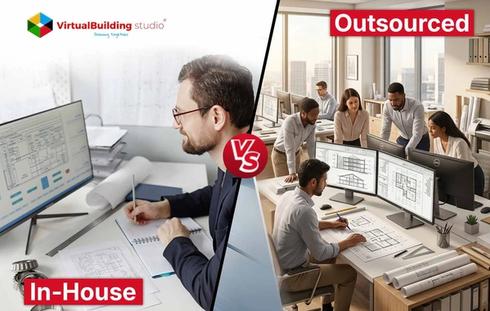
This model allows your core team to focus on strategic design, client relations, and project leadership while the remote production team handles technical execution. Outsourced teams operate under your firm’s standards and quality expectations.
Why Decision‑Makers Are Choosing Architectural Outsourcing Services Now
The shift toward outsourcing usually starts when leaders notice their studio is busy, but their senior architects are stuck doing work they should have outgrown.
Here’s why it matters.
Cost Control and Predictability
In-house staffing means fixed overhead, including their salaries, benefits, high-end workstations, software licenses, and ongoing training. Outsourcing changes the concept of these fixed costs to variable expenses tied directly to project work. Research shows that outsourcing drafting and BIM can reduce labor and operational costs by 30 to 70% compared to in-house staffing in the U.S. and Western Europe.
This is not theoretical. Many firms report that outsourcing drafting reduces the cost per sheet dramatically when compared with in-house production.
Access to Specialized Teams When You Need Them
Finding Revit and BIM professionals in your local area may take a couple of months and might still cause a lack of some skills. But outsourcing partners usually give architects and technicians, who are already pre-vetted, and have experience on working with different platforms such as Revit, ArchiCAD, and Bentley, thus allowing the firms to:
- Acquire skills for tasks like clash-free coordination, custom family creation and code-aligned documentation.
- Eliminate the expensive cycle of layoffs and rehires during demand changes.
- Plus, rather than dealing with the recruitment cycles you will have the predictable capacity that scales with the project inflows.
Scalability and Flexibility
Architecture project pipelines are prone to sudden changes in demand. One quarter might have heavy documentation work while the next one might experience the opposite of the production slowdown. Outsourcing allows you to level up your manpower to the needs of the day without the extra cost of full-time employees. This versatility also allows companies to submit bids on larger or more challenging projects with the assurance that they can quickly boost their production support.
Time-Zone Advantage
With teams in multiple regions, you can create follow-the-sun workflows. End your workday in New York with a set of markups; by the time you return the next morning, deliverables are updated and ready for review. This can accelerate iterations, reduce delivery times, and improve responsiveness without increasing headcount.
Key Architectural Outsourcing Services
When teams are stretched, drafting becomes the bottleneck. Architectural outsourcing services step in to remove that pressure. Here are the key services architecture firms typically outsource.
Architectural Drafting Services
The drafting and detailing services includes:
- 2D drafting, redlines, and sheet updates
- Detail callouts and layer clean-up
- Standardized production using tools like AutoCAD
The value here is tactical: rapid turnaround on repetitive tasks and freeing senior designers from production drudgery. Many firms report shorter turnaround times and improved quality when drafting workflows are thoughtfully outsourced.
Architectural BIM Modeling
Outsourced BIM teams can produce:
- LOD 300–400 coordinated Revit models
- Construction documentation aligned with structural and MEP disciplines
- Model-based quantity takeoffs
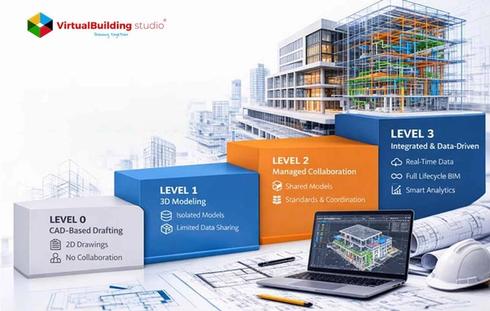
Coordination and predictability are the actual benefits. Less RFIs, improved clash detection, and more seamless changes in the design stages.
Visualization Support
Outsourced visualization from high-impact renderings to walkthroughs and VR scenes brings benefits to pitches, client presentations, and marketing without putting an extra load on the in-house team.
Business Benefits of Outsourcing Architectural BIM Modeling That Matter to Leaders
The benefits listed below are the ones that firm executives usually consider while making a decision about the business sense of outsourcing.
Protection of Margins and Cash Flow
Outsourcing lessens fixed overhead and matches resource expenditure to project income. This improves cash flow and protects margins without sacrificing output quality.
Higher Strategic Focus for Senior Architects
When documentation, redlines, and repetitive BIM tasks are offloaded, senior staff spend more time on design direction, client relationships, and innovation; the areas that drive firm reputation and growth.
Extended Production Hours and Responsiveness
With production continuing after local office hours, your deliverables progress more rapidly. Faster iterations mean better responsiveness to client feedback and more predictable schedules.
Addressing Common Concerns: Quality, Legality, and Risk
Prior to the step of outsourcing, decision-makers of the company unquestionably wish to be informed about the risk, control, and accountability issues.
Is Outsourcing Architectural Drafting Permissible?
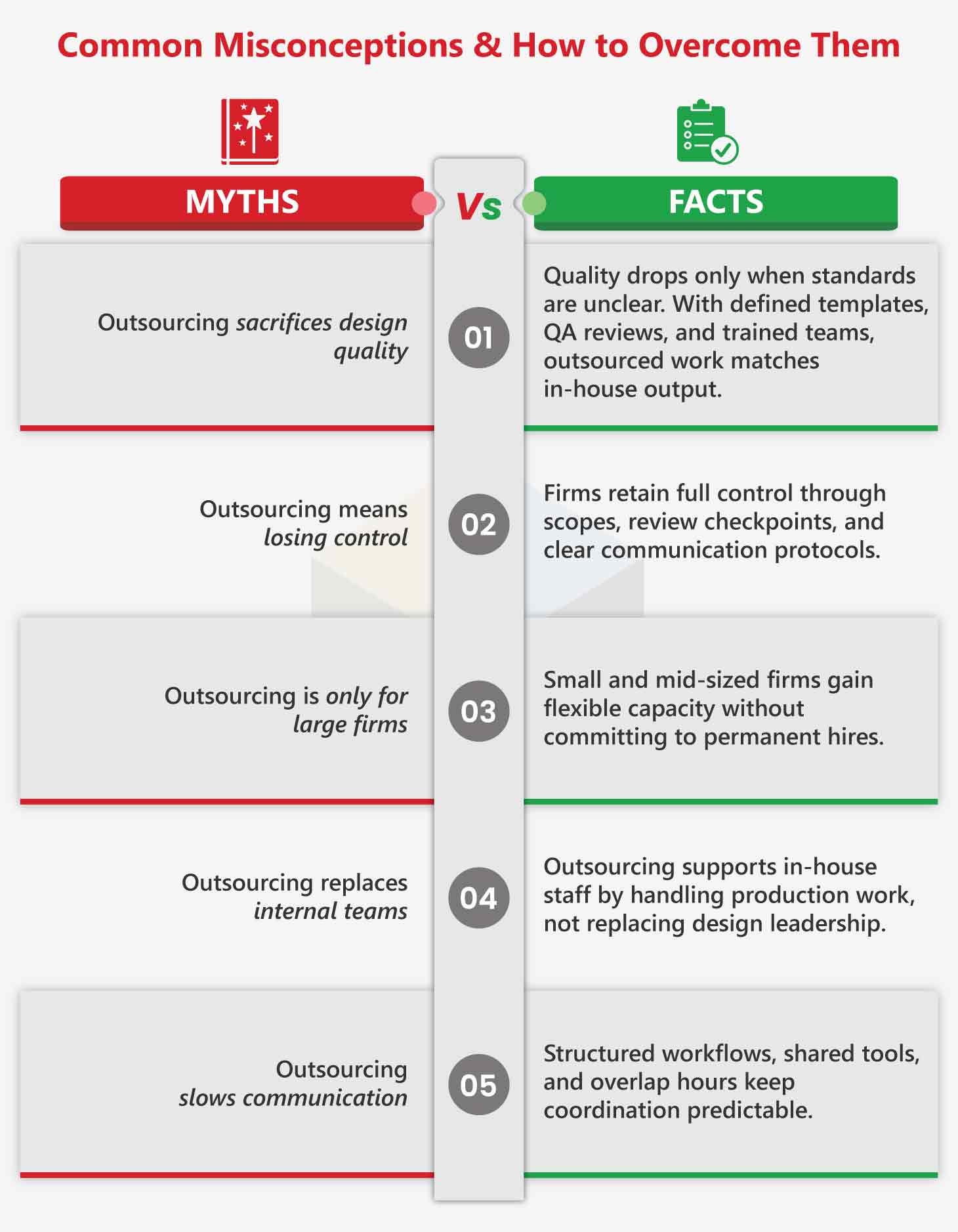
Absolutely. The teams that are outsourced have the role of supporting the production. The licensed architects in the United States will take care of the reviews, seals, and professional liability, thereby guaranteeing compliance. The outsourcing partner will not be held liable professionally.
Quality and Reputation Safeguards
Quality issues do not arise from outsourcing as such but rather from the poor execution of it. The use of unvetted freelancers is the source of the risk. Trusted architectural outsourcing firms utilize trained experts, portfolio examinations, and uniform standards to defend their quality and reputation.
Communication, Culture, and Time Zones
Proficiency in the language and cultural compatibility are important. A number of firms put a lot of emphasis on the fact that their workers are proficient in English and that they have overlapping working hours to reduce friction. The use of clear communication protocols along with regular check-ins is extremely important.
Data Security and IP Protection
You can expect confidentiality agreements, VPN use, and safe cloud services such as BIM 360 or Autodesk Construction Cloud for collaboration. Trustworthy partners follow security standards to ensure the safety of your project information.
How to Choose the Right Architectural Outsourcing Partner
Decision-makers running an architectural firm must consider the below points before finalizing a BIM partner.
- Deep AEC Experience: Rather than general BPO, specialists with architectural and BIM expertise are the ones to go to.
- Technical Mastery: Mastery in Revit, AutoCAD, clash detection, and compliance with the industry standards.
- Structured QA Processes: Two-step review process, key performance indicators, and clear communication.
- Pilot Projects and Trials: Begin with a small scale to test the processes, quality, and how compatible the workflow is with your firm.
Inquire about the potential partners' sample outputs and references from companies that are comparable in size and project type.
Conclusion
Outsourcing is not the removal of the in-house design culture, but it is the addition of that culture. It is a production spike of in-house resources. It is an increase in capacity without the addition of long-term overhead, so that you concentrate on high-value strategic work.
Use outsourcing services for specific cases, such as architectural drafting services for the documentation stage or architectural BIM modeling for coordination work. Create workflows, set standards, and gain trust before moving on to the next step.
Think of outsourcing is like a strategic growth lever, instead of considering it a cost-cutting tactic. This is the case for USA architecture firms that want to be creative, keep margins, and stay ahead of their competitors in a tight market.